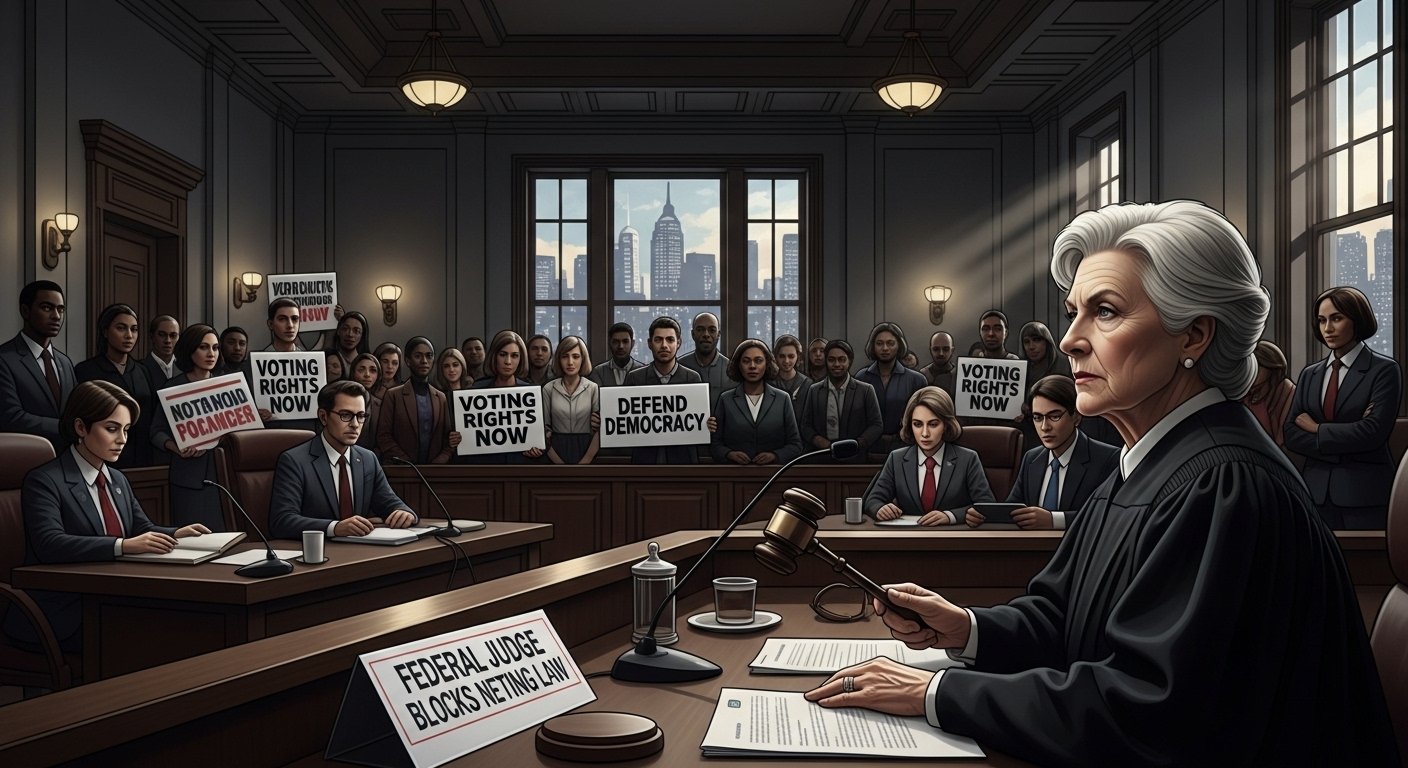
Federal Judge Blocks New Law That Critics Say Restricts Voting Rights in Multiple States
Voting rights have always been a central part of democracy in the United States. When new laws are introduced that affect how people vote, the issue quickly becomes a major national conversation. Recently, a federal judge blocked a controversial voting law that critics argued could restrict access to the ballot for many citizens. The decision has sparked debate across the country about election security, voter access, and the role of the courts in protecting democratic rights.
Why the Law Was Controversial
The law in question was introduced as part of a broader effort to change election procedures in several states. Supporters of the law argued that it was designed to improve election security and increase confidence in voting systems. They claimed that new identification requirements and stricter procedures would reduce the possibility of fraud.
Critics, however, believed the changes could make it harder for some people to vote. Civil rights groups and voting advocates argued that certain requirements could disproportionately affect older voters, people living in rural areas, and individuals who may not have easy access to official identification.
Many advocacy organizations said that these restrictions could discourage eligible voters from participating in elections. For them, the issue was not only about the law itself but also about ensuring equal access to the democratic process.
The Role of the Federal Judge
A federal judge stepped in after several lawsuits challenged the law. The plaintiffs argued that the legislation could violate constitutional protections and federal voting laws. They asked the court to temporarily stop the law from being enforced while the legal issues were reviewed.
After examining the arguments from both sides, the judge issued an order blocking the law from taking effect. This decision does not necessarily mean the law will never be implemented, but it prevents the changes from being applied until the courts fully review the case.
Judges often use this type of ruling when there are serious concerns that a law could cause harm before a final legal decision is made. By blocking the law temporarily, the court ensures that voters are not affected while the legal process continues.
Reactions From Lawmakers and Advocacy Groups
The ruling has received strong reactions from both supporters and critics of the law. Some lawmakers who supported the legislation expressed disappointment with the decision. They argued that the law was meant to protect the integrity of elections and improve voter confidence.
On the other hand, many civil rights organizations welcomed the ruling. They described it as an important step toward protecting access to voting. Advocacy groups emphasized that voting should remain accessible to all eligible citizens without unnecessary barriers.
Political analysts say this type of legal dispute has become more common in recent years. Election rules often change as states attempt to update their systems, but these changes frequently face legal challenges.
Why Voting Laws Often Face Legal Challenges
Voting regulations are complex because they must balance two important goals. The first goal is ensuring that elections are secure and trustworthy. The second goal is making sure that every eligible citizen has a fair opportunity to vote.
When lawmakers introduce new rules, critics sometimes worry that the balance may shift too far in one direction. For example, stricter identification requirements might improve security but could also make it harder for certain voters to participate.
Courts play an important role in reviewing these disputes. Judges evaluate whether laws comply with the Constitution and federal voting protections. Their decisions can shape election policies across the country.
Impact on Upcoming Elections
The immediate impact of the judge’s decision is that the voting law will not be enforced in upcoming elections while the legal case continues. Election officials in the affected states will continue using the previous voting rules for now.
For voters, this means there will likely be no immediate changes to how ballots are cast or counted. However, the situation could change depending on the outcome of future court decisions.
Legal experts say the case could eventually reach higher courts if the parties involved decide to appeal the ruling. If that happens, the issue could become a major legal precedent affecting voting laws nationwide.
The Broader Debate About Voting Access
This legal battle highlights a larger national conversation about voting rights. Across the United States, lawmakers continue to propose new election laws aimed at improving security, increasing efficiency, or expanding access.
Supporters of stricter laws often argue that clear procedures help build public confidence in elections. Meanwhile, voting rights advocates emphasize the importance of making the process accessible and fair for all citizens.
Both perspectives reflect concerns about protecting the democratic process. The challenge is finding solutions that maintain election integrity while ensuring that every eligible voter can participate without unnecessary obstacles.
What Happens Next
The legal process surrounding the blocked voting law is far from over. Courts will continue to review evidence, hear arguments from both sides, and decide whether the legislation meets constitutional standards.
Until a final decision is reached, the temporary block remains in place. This ensures that voters are not affected by the disputed changes while the courts carefully examine the case.
For many Americans, the outcome will be closely watched. Voting rights remain one of the most important pillars of democracy, and any legal decision affecting those rights carries significant national attention.