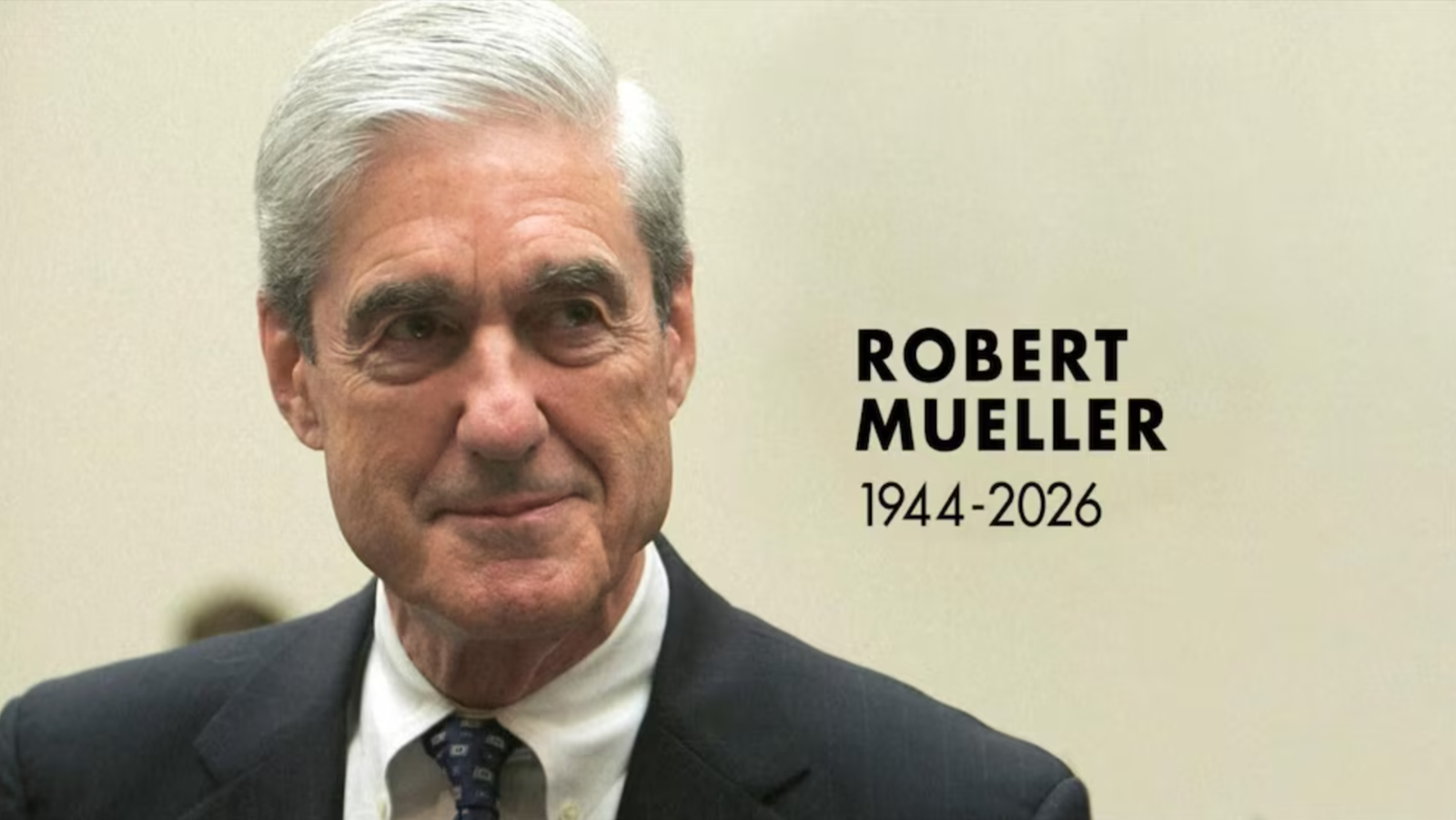
Robert S. Mueller III, one of the most influential figures in modern American law enforcement, has died at the age of 81. His career spanned decades of public service, including leading the FBI through the aftermath of the September 11 attacks and later overseeing one of the most politically charged investigations in U.S. history.
For many Americans, Mueller’s name is closely tied to two defining moments: the transformation of the FBI after 9/11 and the investigation into Russian interference in the 2016 presidential election. His death marks the end of a long career defined by discipline, controversy, and a reputation for integrity.
Early Life and Military Service
Robert Mueller was born in 1944 in New York City and later built a strong academic foundation, attending Princeton University and earning a law degree from the University of Virginia.
Before entering law enforcement, Mueller served in the U.S. Marine Corps during the Vietnam War. His service earned him several honors, including the Bronze Star and Purple Heart, reflecting both bravery and sacrifice.
This military background shaped his leadership style—structured, disciplined, and focused on duty above politics.
Rise Through the Justice System
Mueller spent decades working within the U.S. justice system, holding key positions such as:
- Federal prosecutor
- U.S. Attorney
- Head of the Justice Department’s Criminal Division
Throughout his career, he handled major criminal and national security cases, including high-profile prosecutions involving international crime and terrorism.
He developed a reputation as a meticulous investigator—someone who prioritized facts over political pressure.
FBI Director During a National Crisis
Mueller became Director of the FBI in September 2001—just days before the 9/11 terrorist attacks.
This timing placed him at the center of one of the most critical periods in American history. Over the next 12 years, he led the transformation of the FBI from a traditional law enforcement agency into a counterterrorism-focused organization.
Key Contributions:
- Reorganized FBI priorities toward national security
- Strengthened intelligence-sharing systems
- Expanded global counterterrorism efforts
His leadership during this time earned bipartisan respect, as both Republican and Democratic administrations relied on his guidance.
Mueller ultimately served longer than the standard 10-year term, receiving a special extension due to the importance of continuity in national security.
The Russia Investigation: A Defining Moment
While Mueller’s FBI tenure was historic, his role as Special Counsel from 2017 to 2019 brought him back into the national spotlight.
He was appointed to investigate:
- Russian interference in the 2016 election
- Possible links between Russia and the Trump campaign
- Potential obstruction of justice
Key Findings:
- Russia did interfere in the 2016 election
- Multiple individuals connected to the Trump campaign were investigated and charged
- The report did not establish a criminal conspiracy between Trump and Russia
However, Mueller’s report did not fully clear then-President Donald Trump on obstruction of justice, leaving room for political debate and interpretation.
Political Impact and Controversy
The Mueller investigation became one of the most divisive political events in modern U.S. history.
Supporters said:
- He upheld the rule of law
- Conducted a fair and independent investigation
- Protected democratic institutions
Critics argued:
- The investigation was politically motivated
- It lasted too long and caused national division
- It failed to produce decisive conclusions
Former President Donald Trump frequently criticized Mueller, calling the investigation a “witch hunt.”
Even after Mueller’s death, tensions surrounding his legacy remained evident in political reactions.
Reaction to His Death
Mueller’s passing sparked strong reactions across the political spectrum.
Many political leaders and former officials praised his decades of service, highlighting his integrity and dedication to the country.
At the same time, controversy emerged when Donald Trump reacted publicly in a highly critical manner, drawing widespread backlash from both parties.
This contrast in reactions reflects the lasting political divide associated with Mueller’s work.
Health and Final Years
In his later years, Mueller faced health challenges, including a diagnosis of Parkinson’s disease, which became public in 2025.
He spent his final years largely out of the public eye after retiring from active legal work in 2021.
Mueller died on March 20, 2026, in Charlottesville, Virginia, according to reports confirmed by his family and associates.
A Legacy of Public Service
Robert Mueller’s career is difficult to define in simple terms. He was:
- A war veteran
- A career prosecutor
- A national security leader
- A central figure in one of the most controversial investigations in U.S. history
Supporters view him as a symbol of integrity and professionalism. Critics see him as part of a politically charged era that deepened divisions in the country.
What remains clear is that Mueller played a critical role in shaping modern American law enforcement and political accountability.
Why Mueller’s Legacy Matters Today
For U.S. readers, Mueller’s legacy continues to influence current debates about:
🇺🇸 Government Accountability
His investigation reinforced the idea that even the highest office in the country can be scrutinized.
🛡️ National Security
His work after 9/11 helped redefine how the U.S. approaches terrorism and intelligence.
⚖️ Rule of Law
Mueller’s career emphasized the importance of legal processes over political pressure.
Robert Mueller’s death marks the end of a remarkable and complex chapter in American history.
From leading the FBI during a national crisis to investigating a sitting president, Mueller stood at the center of some of the most critical moments of the 21st century.
His legacy—whether viewed as heroic, controversial, or somewhere in between—will continue to shape discussions about justice, leadership, and democracy in the United States for years to come.