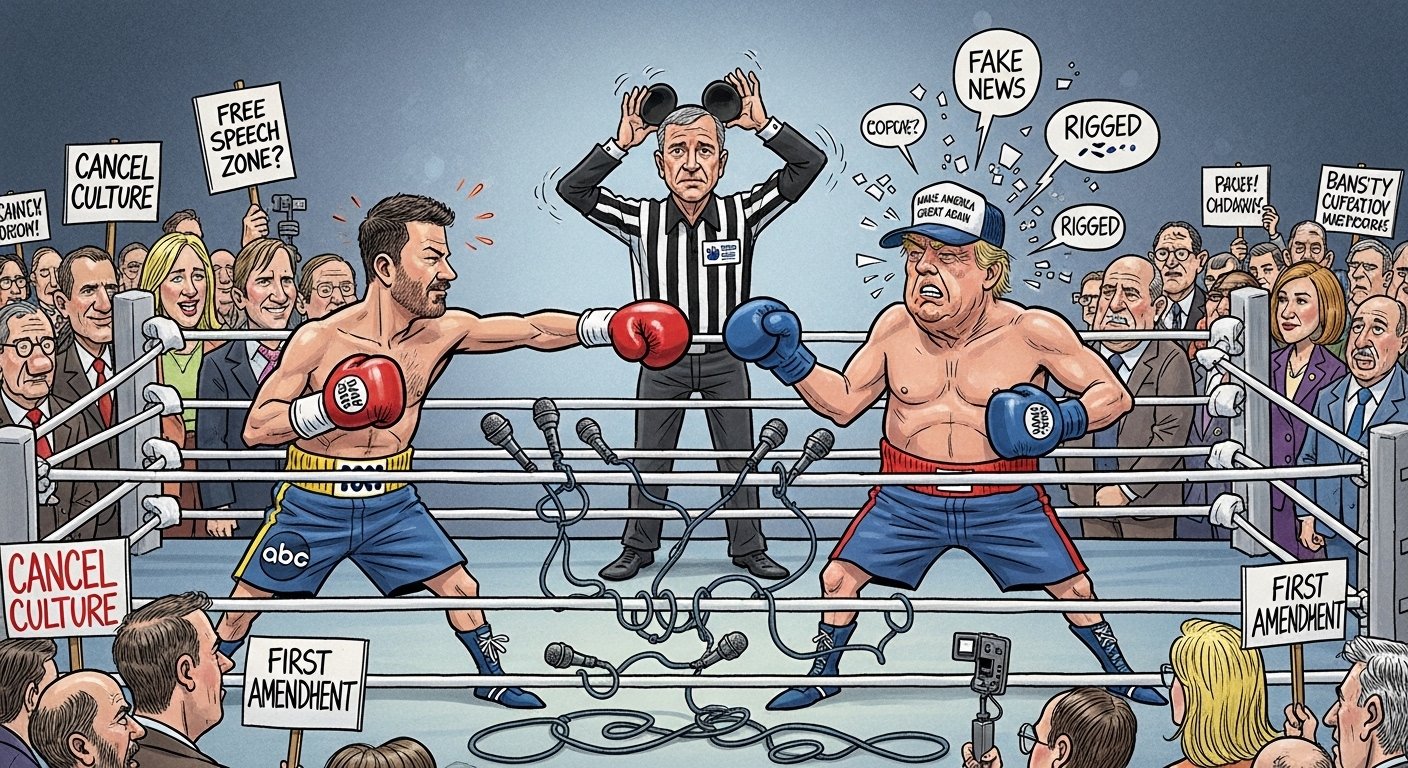
Jimmy Kimmel vs. Trump: A Free Speech Showdown Testing Disney’s New CEO
A fresh political and media firestorm is unfolding in the United States—this time involving late-night host Jimmy Kimmel, President Donald Trump, and media giant The Walt Disney Company.
At the center of the controversy is a joke, a shooting incident, and a high-stakes decision for Disney’s newly appointed CEO, Josh D’Amaro.
What Sparked the Controversy
The situation began when Kimmel made a joke during a satirical segment on Jimmy Kimmel Live!—mocking the traditional White House Correspondents’ Dinner.
In the monologue, he referred to First Lady Melania Trump as having a “glow like an expectant widow.” The remark was intended as a roast-style joke about the age gap between the Trumps, according to Kimmel. (KRDO)
However, the timing quickly turned the joke into a national controversy.
Just days later, a gunman attempted to breach security at the real White House Correspondents’ Dinner, prompting a major evacuation and raising fears of political violence. (The Washington Post)
Trump and Allies Demand Action
Following the incident, Trump and his allies sharply condemned Kimmel’s comments. The president publicly called on ABC—and its parent company Disney—to fire Kimmel immediately, labeling the joke a “despicable call to violence.” (KESQ)
Melania Trump also issued a strong statement, arguing that the joke was harmful and contributed to a toxic political climate. (KESQ)
Supporters of the president went further, linking Kimmel’s humor to broader concerns about media influence and political rhetoric in a polarized America.
Kimmel’s Response: Defending Comedy and the First Amendment
Kimmel did not back down.
On his next show, he addressed the controversy head-on, saying the joke was being misinterpreted and had nothing to do with violence. He emphasized that satire and political comedy are protected forms of expression under the First Amendment.
He also pointed out that he has consistently spoken out against gun violence and rejected the idea that his words could incite harm. (KRDO)
A Major Test for Disney’s New Leadership
The controversy has quickly become a defining moment for Disney’s new CEO, Josh D’Amaro, who took over just weeks ago.
Disney owns ABC, the network that airs Kimmel’s show, placing the company directly in the political crossfire.
So far, Disney has shown no indication that it plans to fire Kimmel. Behind the scenes, the company appears to be maintaining a “business as usual” approach—allowing Kimmel to continue his show despite political pressure. (KRDO)
This decision carries real stakes:
- If Disney caves to political pressure, it risks backlash over censorship and corporate interference in media.
- If it stands firm, it may face continued attacks from Trump and his supporters.
Why This Matters in the U.S.
This isn’t just about a late-night joke—it reflects deeper tensions in American society:
1. Free Speech vs. Political Pressure
The situation highlights ongoing debates about whether comedians and media figures should face consequences for controversial content—or be protected under free speech.
2. Corporate Responsibility
Major companies like Disney are increasingly caught between political forces and public expectations, especially when their platforms influence millions.
3. Media and Politics Colliding
The clash continues a long-running feud between Trump and late-night hosts, who have frequently criticized him through satire. (Wikipedia)
The Bigger Picture
This is not the first time Kimmel has faced backlash tied to Trump-related commentary. In 2025, his show was temporarily suspended after another controversy, sparking nationwide debate over media freedom and political influence. (Wikipedia)
Now, with a new CEO in charge at Disney and heightened political tensions across the country, the stakes are even higher.
Bottom Line
The Kimmel-Trump clash is more than a media controversy—it’s a test of:
- Free speech in modern America
- The power of political influence over corporations
- How far comedy can go in a divided nation
Disney’s response—or lack of one—may set a precedent for how major U.S. media companies handle political pressure going forward.