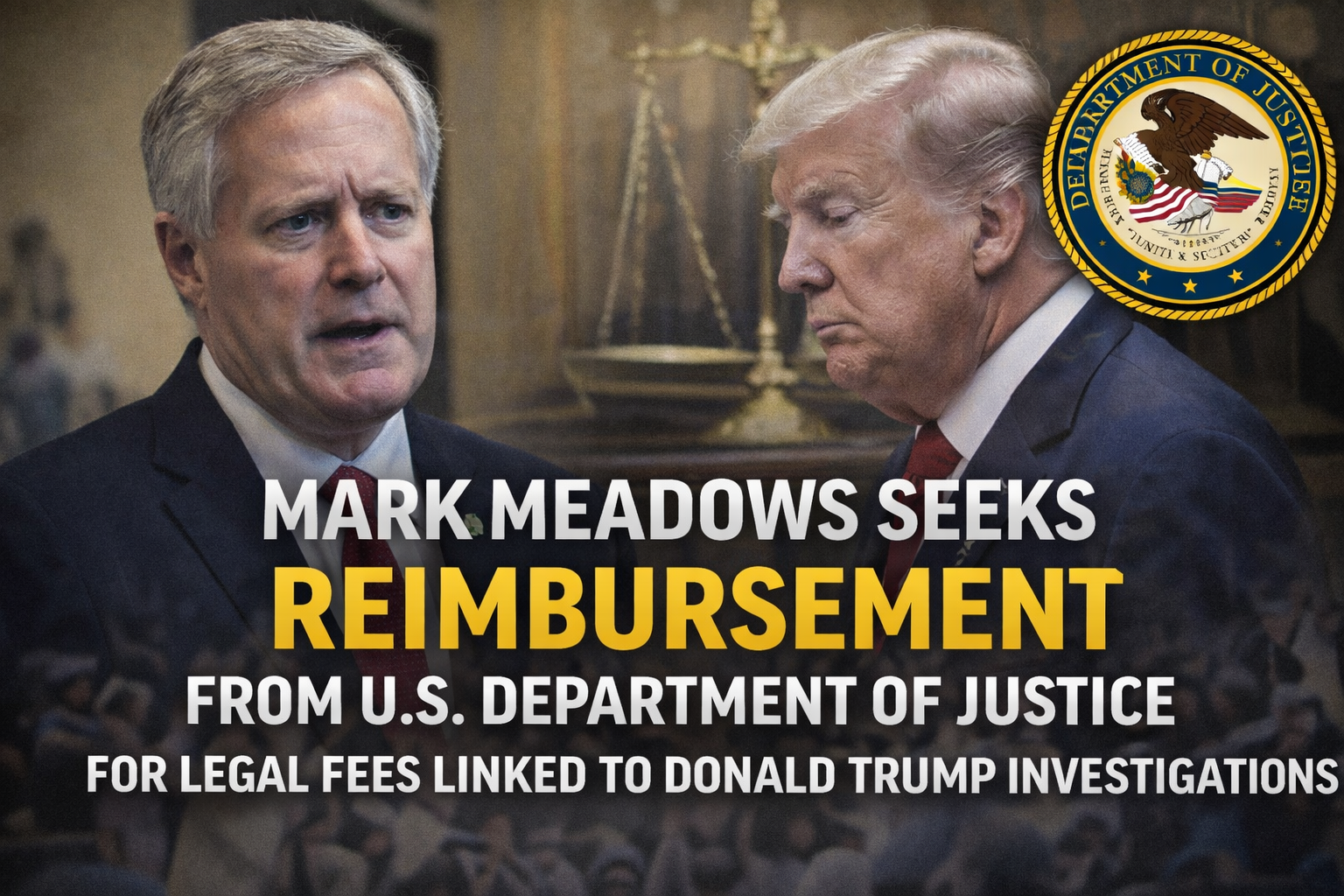
Mark Meadows Seeks Reimbursement From U.S. Department of Justice for Legal Fees Linked to Donald Trump Investigations
Former White House Chief of Staff Mark Meadows is requesting that the U.S. Department of Justice (DOJ) reimburse him for legal expenses he incurred while responding to multiple investigations connected to former President Donald Trump.
The request centers on whether government officials who face legal scrutiny because of actions taken while performing their official duties should have their legal costs covered by the federal government.
The issue has become a significant legal and political question, touching on government ethics rules, federal employee protections, and the ongoing investigations related to Trump’s presidency.
Why Meadows Is Asking for Reimbursement
Mark Meadows served as White House Chief of Staff during the final months of the Trump administration, one of the most powerful positions in the federal government. As part of that role, he was involved in numerous discussions and policy decisions that later became the focus of investigations.
After leaving office, Meadows became a key figure in several legal inquiries examining events surrounding the end of Trump’s presidency. Because of his role and proximity to the former president, he was asked to provide testimony and documents to investigators.
Responding to those requests required hiring private legal counsel, which resulted in significant legal bills.
Meadows now argues that because the legal work was related to actions taken as part of his official government duties, the Justice Department should reimburse him for those costs.
How Federal Reimbursement Rules Work
Under federal law, current or former government employees may request legal representation or reimbursement from the Department of Justice if they face legal issues connected to their official responsibilities.
The DOJ evaluates these requests based on several factors, including:
- Whether the actions in question were part of official government duties
- Whether the employee was acting within the scope of their job
- Whether providing legal support serves the interests of the United States government
If the DOJ determines that the employee qualifies under these rules, it can approve reimbursement for attorney fees or provide legal representation.
However, such approvals are not automatic and are often closely scrutinized, especially when politically sensitive cases are involved.
The Investigations Involving Meadows
Mark Meadows’ legal expenses largely stem from his involvement in investigations related to the final weeks of the Trump presidency.
One of the most prominent inquiries examined efforts to challenge the results of the 2020 United States presidential election. Investigators sought to understand the actions taken by White House officials, including Meadows, during that period.
As chief of staff, Meadows communicated with lawmakers, state officials, and members of the Trump administration during discussions about election challenges and potential legal strategies.
Because of these activities, he became an important witness in multiple investigations conducted by Congress and federal prosecutors.
The Justice Department’s Role
The Department of Justice must now determine whether Meadows’ request meets the criteria for reimbursement.
Legal experts say the department will likely examine whether Meadows’ actions were clearly tied to his official responsibilities as chief of staff or whether they were related to political activities or campaign efforts.
That distinction is critical because federal reimbursement policies typically apply only to actions taken as part of official government duties—not personal or political activities.
If the DOJ concludes that the legal expenses were connected to official government work, it could approve reimbursement. If not, Meadows would remain responsible for covering the costs himself.
Political and Legal Reactions
The request has sparked debate among legal analysts and political observers.
Some experts argue that government officials should not be forced to pay out of pocket for legal expenses when they are questioned about actions taken while serving in official roles.
Others believe that reimbursing legal fees in politically charged investigations could set a controversial precedent, particularly when the investigations involve issues related to election disputes or alleged misconduct.
Supporters of Meadows say his actions were part of his responsibilities as chief of staff and therefore fall within the scope of federal reimbursement rules.
Critics, however, argue that some activities surrounding election challenges may not qualify as official government business.
Why the Decision Matters
The Justice Department’s decision could have broader implications beyond this single case.
If the DOJ approves Meadows’ reimbursement request, it could signal that government officials may receive financial protection when facing legal scrutiny tied to their official duties—even after leaving office.
Such a decision could influence how future administrations handle legal defense costs for former officials involved in investigations.
Conversely, rejecting the request could reinforce stricter limits on when federal funds can be used to cover legal expenses.
The Larger Context
Legal disputes involving former administration officials have become increasingly common in Washington, especially as political investigations expand.
Officials who served in high-level roles often find themselves navigating complex legal challenges long after their time in government ends.
For Meadows, the reimbursement request represents an effort to shift some of the financial burden of those investigations back to the federal government.
For the Justice Department, the decision requires balancing legal precedent, government policy, and political sensitivity.
What Happens Next
The DOJ will review Meadows’ request through its internal legal processes before making a final determination.
That review could take time, as officials examine documentation, legal arguments, and the specific circumstances surrounding Meadows’ legal expenses.
Until the department reaches a decision, the issue remains unresolved—but it highlights the ongoing legal and political fallout connected to the final months of the Trump administration.