US–Iran Ceasefire: Pentagon Explains What Happened and What Comes Next
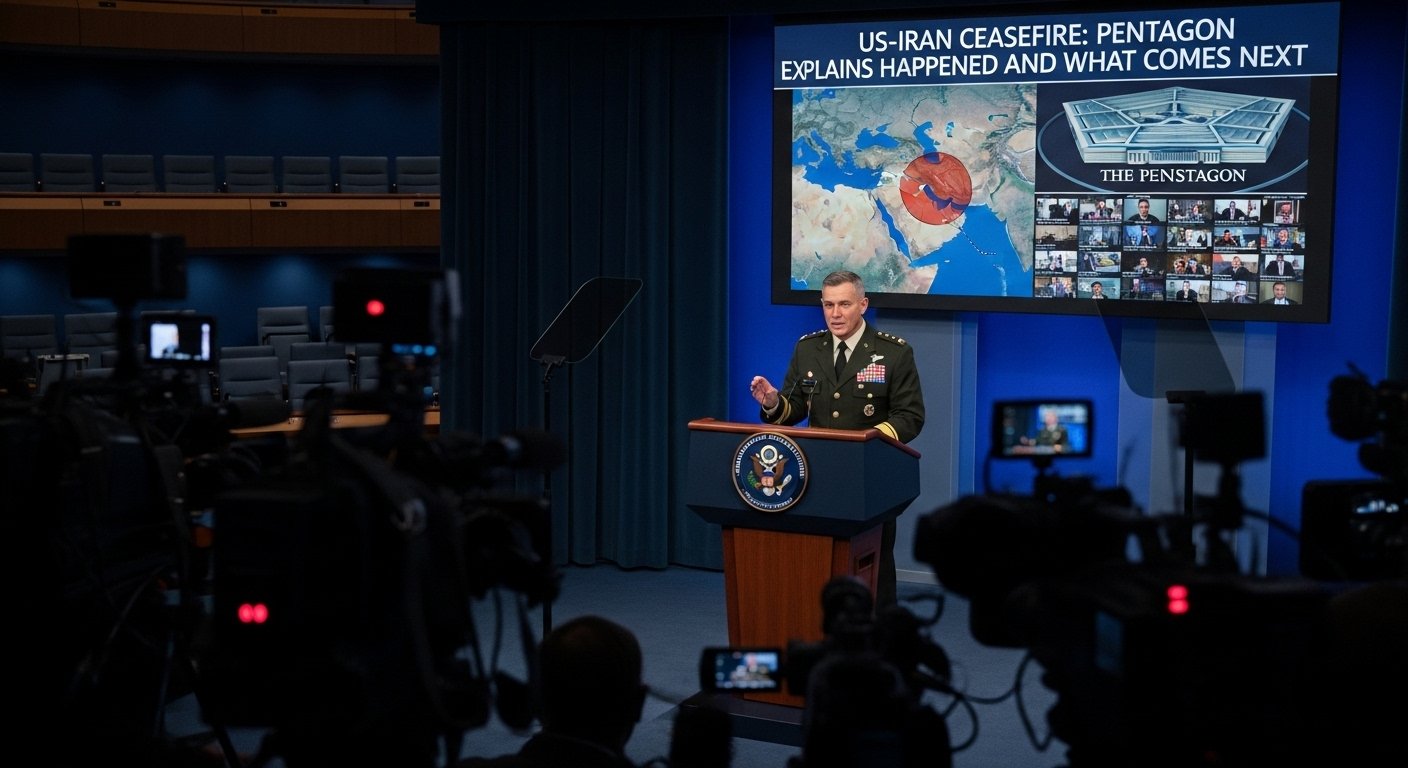
After weeks of intense fighting between the United States and Iran, American officials announced a temporary ceasefire designed to stop the immediate violence and allow time for diplomatic negotiations. The announcement came during a Pentagon press briefing led by U.S. Defense Secretary Pete Hegseth, who described the conflict as a major military success for the United States.
A Temporary Pause After Weeks of War
The ceasefire came after more than a month of fighting between the two countries. President Donald Trump agreed to pause military operations for two weeks, giving both sides time to negotiate a broader peace agreement. The truce was also linked to the reopening of the Strait of Hormuz, one of the most important oil shipping routes in the world. (Wikipedia)
This shipping lane had been blocked during the conflict, creating major disruptions in global oil markets and raising fears of a larger regional war.
Pentagon Claims Iran Was Forced Into the Ceasefire
During the press conference, Hegseth argued that the ceasefire happened because Iran had suffered heavy military losses. According to U.S. officials, American strikes destroyed large parts of Iran’s military infrastructure, including weapons factories, missile systems, and air defenses. (Reuters)
Hegseth even claimed Iran had effectively “begged for the ceasefire,” describing the American campaign as a decisive victory that weakened Iran’s military capabilities for years.
However, Iranian officials have offered a very different version of events. Tehran says the ceasefire proves its strategy worked and that the country achieved many of its war goals.
The Ceasefire Is Fragile
Despite the pause in fighting, Pentagon leaders warned that the situation remains extremely unstable. General Dan Caine, chairman of the Joint Chiefs of Staff, explained that a ceasefire is only a pause in hostilities, not a final peace agreement. (The Washington Post)
He emphasized that U.S. forces remain ready to resume military operations immediately if negotiations fail or if Iran violates the agreement.
Military Losses and the Cost of the Conflict
The war has had significant human and financial costs. At least 13 American service members were killed and hundreds were injured during the conflict. (Reuters)
Thousands of targets inside Iran were struck during the military campaign, including missile bases, naval facilities, and weapons production sites.
Even with the ceasefire, regional tensions remain high. There have already been reports of continued attacks in nearby areas, and some conflicts in the Middle East — such as fighting involving Israel and groups in Lebanon — are continuing separately.
What Happens Next
The next phase will likely involve diplomatic talks aimed at reaching a longer-term agreement. Negotiations may focus on several major issues, including:
- Iran’s nuclear program
- U.S. military presence in the Middle East
- Security in the Strait of Hormuz
- Regional stability and sanctions
Diplomats from multiple countries, including Pakistan, have been involved in mediating discussions between Washington and Tehran. (Wikipedia)
A Pause, Not the End
For now, the ceasefire offers a brief moment of relief after weeks of violence. But many analysts warn that the agreement is fragile and could collapse if political or military tensions rise again.
In short, the Pentagon briefing made one thing clear: the fighting may be paused, but the broader conflict between the United States and Iran is far from over.