Iran’s 10-Point Plan and Rising U.S. Tensions: What It Means for Diplomacy and the Middle East
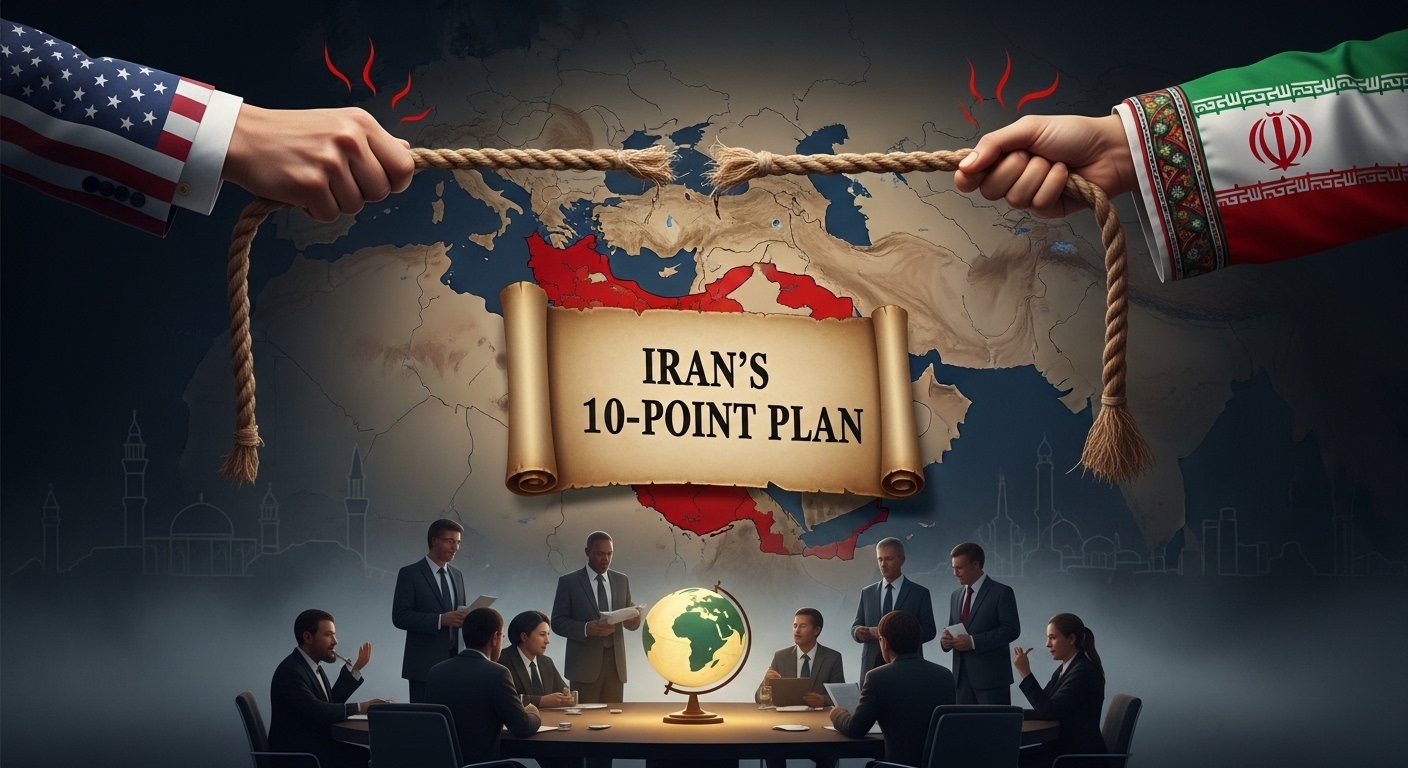
Tensions between the United States and Iran have escalated sharply in 2026, pushing the region close to a major conflict. At the center of the diplomatic struggle is a 10-point proposal from Iran that former U.S. President Donald Trump described as a “workable basis” for negotiations, even though serious disagreements remain. (Wikipedia)
The proposal emerged during intense negotiations aimed at preventing a wider war in the Middle East. While both sides claim progress, ongoing military threats, sanctions disputes, and disagreements about nuclear activities have made the situation extremely fragile.
Background: How the Crisis Escalated
The current standoff developed after months of military and political tensions involving Iran, the United States, and regional allies. Fighting in the region and disputes over Iran’s nuclear program pushed relations to the brink.
At one point, Trump warned that if Iran did not reopen the Strait of Hormuz, the United States might launch major strikes on Iranian infrastructure such as power plants and bridges. This ultimatum created enormous pressure for negotiations. (Fox News)
Just hours before the deadline for potential military escalation, Iran delivered a 10-point diplomatic proposal through international mediators. Trump responded by saying the plan could serve as a starting point for talks rather than a final agreement. (Wikipedia)
The result was a temporary two-week ceasefire, giving both sides time to explore a longer-term settlement.
The Key Points in Iran’s 10-Point Proposal
Although the exact language varies between sources, the main demands and conditions included several major political and economic goals:
1. End of U.S. and Allied Attacks
Iran called for a complete halt to military operations against its territory and its regional allies.
2. Lifting All U.S. Sanctions
One of Iran’s most important demands was the removal of both primary and secondary U.S. sanctions that have heavily impacted its economy. (The Wall Street Journal)
3. Recognition of Iran’s Nuclear Rights
Iran insisted on maintaining the right to enrich uranium for peaceful purposes, something the United States has historically opposed. (The Wall Street Journal)
4. Release of Frozen Iranian Assets
Iran asked for the unfreezing of billions of dollars in funds currently held in foreign banks.
5. Control of the Strait of Hormuz
Iran proposed maintaining influence over the Strait of Hormuz while allowing ships to pass safely under a regulated system. (The Guardian)
6. Possible Shipping Fees
Reports suggest Iran could charge fees to ships passing through the strait to fund post-war reconstruction.
7. Withdrawal of U.S. Troops
The plan originally included removing American forces from the region, although later discussions indicated Iran might soften this demand. (The Wall Street Journal)
8. Ending International Sanctions on Military Trade
Iran also wants an end to United Nations restrictions that limit its military purchases.
9. Compensation or Economic Relief
Some proposals suggested compensation or financial mechanisms to repair damage from the conflict.
10. A Wider Regional Ceasefire
Iran called for a ceasefire across the region, including conflicts involving groups allied with Tehran.
Why the Plan Is Controversial
Despite being described as a possible starting point for talks, the proposal includes several demands that are extremely difficult for the United States and its allies to accept.
Nuclear Enrichment Dispute
The United States wants strict limits on Iran’s nuclear activities. Iran insists that enrichment is its legal right under international law.
Strait of Hormuz Control
The strait is one of the most critical oil shipping routes in the world. Allowing Iran control over it could significantly affect global energy markets and international security.
Sanctions Relief
U.S. sanctions are tied to multiple legal and political issues, meaning removing them quickly would require congressional approval and complex negotiations.
Iran Suspends Direct Diplomacy with the U.S.
Complicating negotiations further, Iran recently cut off direct diplomatic communications with the United States after strong threats from Washington. (Anadolu Ajansı)
Instead, discussions are continuing indirectly through mediators and international partners. This type of diplomacy is slower and more complicated but helps avoid direct confrontation.
A Fragile Ceasefire
Despite the tensions, a temporary ceasefire was reached. The agreement includes:
- A two-week pause in military attacks
- Reopening the Strait of Hormuz to shipping
- Continued negotiations toward a larger peace framework (Wikipedia)
However, disagreements remain over what the ceasefire actually covers and whether all parties—including regional allies—will follow its terms.
Global Impact of the Crisis
The conflict has already had major consequences worldwide.
Oil Markets
Because about 20% of the world’s oil passes through the Strait of Hormuz, disruptions caused sharp increases in energy prices.
Shipping and Trade
Many shipping companies temporarily stopped using the route due to safety concerns.
Regional Stability
Military actions involving Iran, Israel, and U.S. forces have raised fears of a wider Middle East war.
What Could Happen Next
Several scenarios are possible in the coming weeks:
- Successful negotiations leading to a broader peace agreement.
- Extended ceasefire while talks continue.
- Breakdown in diplomacy, which could lead to renewed military strikes.
Even if negotiations continue, experts say resolving the deep disagreements over nuclear policy, sanctions, and regional security will take time.
Iran’s 10-point proposal has opened the door to negotiations, but it is far from a finalized peace agreement. The United States and Iran remain divided on several critical issues, particularly nuclear rights, sanctions relief, and regional security.
For now, the temporary ceasefire has prevented an immediate escalation, but the situation remains extremely delicate. The next phase of diplomacy will determine whether the region moves toward stability—or returns to conflict.