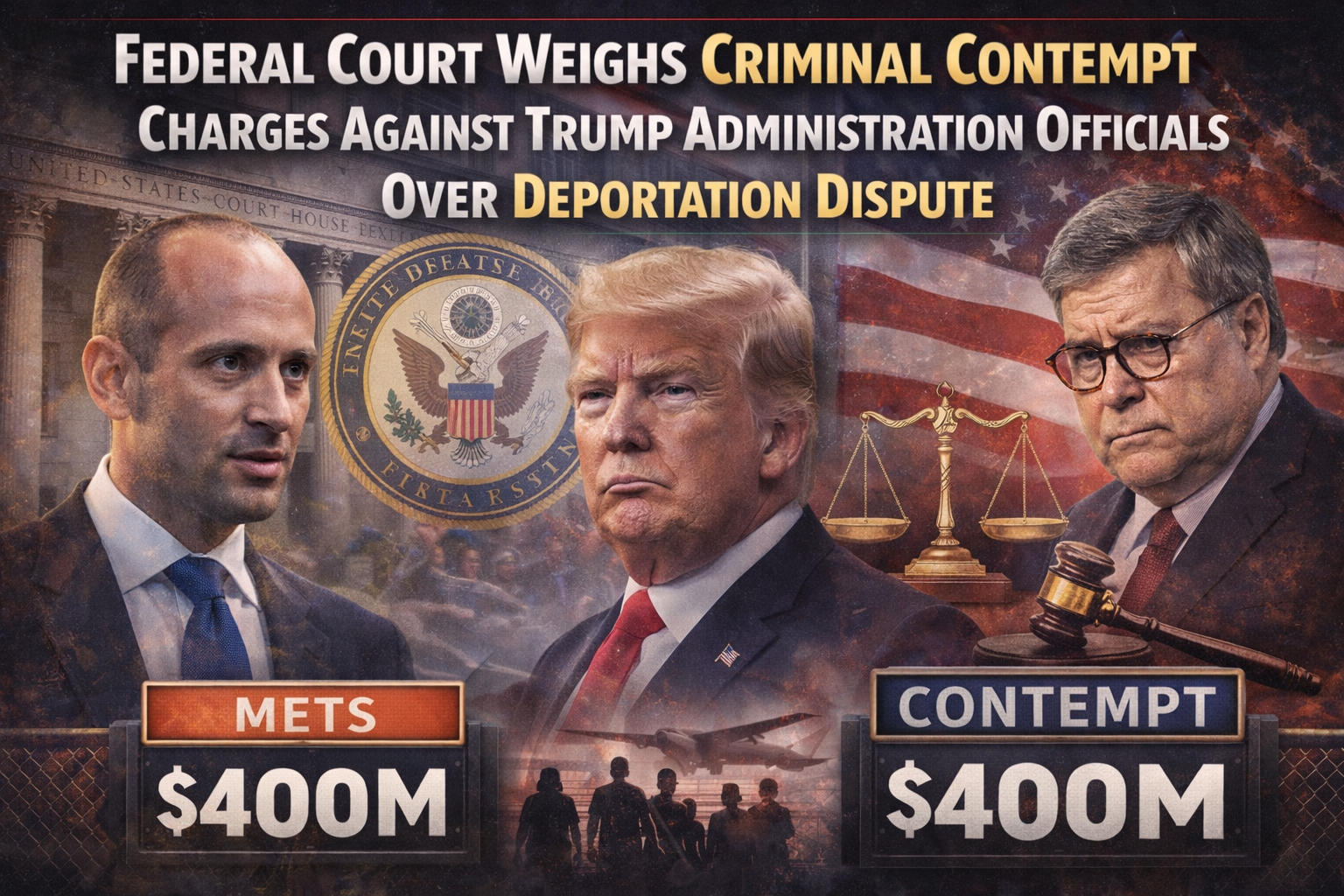
Federal Court Weighs Criminal Contempt Charges Against Trump Administration Officials Over Deportation Dispute
A federal court is considering whether officials connected to the Trump administration could face criminal contempt proceedings after allegedly failing to follow a court order related to immigration enforcement and deportations.
The case highlights an escalating legal confrontation between the executive branch and the judiciary over how immigration policies should be implemented — and what happens when government officials are accused of ignoring a federal judge’s directive.
Legal experts say the outcome could carry significant consequences for the relationship between presidential authority and the courts.
What the Dispute Is About
The controversy centers on deportation actions taken by federal immigration authorities.
A federal judge had issued an order restricting certain deportations while legal challenges to the policy were still being considered.
However, lawyers representing migrants argued that deportations continued despite the court’s directive.
Because of this, the court is now examining whether government officials violated that order — a situation that could lead to criminal contempt charges if the judge determines the violation was deliberate.
What Criminal Contempt Means
Criminal contempt is a serious legal action used when someone is accused of intentionally defying a court’s authority.
Unlike civil contempt, which is often used to force compliance with a court order, criminal contempt is intended to punish conduct that undermines the judicial system.
If officials are found guilty of criminal contempt, penalties could include:
- Fines
- Court sanctions
- Possible jail sentences in extreme cases
Such charges are rare when directed at government officials carrying out federal policy.
The Role of the Federal Court
The case is currently unfolding in U.S. District Court, where the judge overseeing the immigration dispute is reviewing evidence about whether officials knowingly violated the order.
The court is examining several key questions:
- Did federal officials understand the limits of the judge’s order?
- Were deportations carried out after the ruling was issued?
- If so, were those actions intentional or the result of miscommunication?
The answers could determine whether the court pursues formal contempt proceedings.
Immigration Policy at the Center of the Fight
Immigration enforcement has been one of the most contentious policy areas in the United States for years.
Under the Trump administration, immigration policies have focused heavily on stricter border enforcement and expanded deportation efforts.
Supporters argue these measures are necessary to maintain border security and enforce existing immigration laws.
Critics say aggressive enforcement can violate legal protections for migrants seeking asylum or humanitarian relief.
The current case represents a legal clash between those policy goals and the courts’ role in reviewing whether enforcement actions comply with federal law.
Why the Case Matters
Legal scholars say the dispute raises important constitutional questions about separation of powers.
Under the U.S. system of government:
- The executive branch enforces laws.
- The judicial branch interprets laws and ensures government actions follow the Constitution.
When a court order is allegedly ignored, it can trigger a major constitutional conflict between those branches.
That is why judges sometimes use contempt proceedings to enforce compliance with their rulings.
Possible Outcomes
Several outcomes remain possible as the court continues reviewing the case.
The judge could decide:
- There was no intentional violation of the court’s order.
- Officials misunderstood the scope of the ruling.
- The violation was deliberate and warrants criminal contempt proceedings.
If the court moves forward with contempt charges, prosecutors could become involved, escalating the legal dispute even further.
Political and Legal Reactions
The case has already sparked strong reactions across the political spectrum.
Supporters of the administration argue the situation reflects confusion over complex immigration rulings and evolving policies.
Critics say ignoring a court order would represent a serious threat to the rule of law.
Legal experts note that disputes between courts and executive officials are rare but not unprecedented.
However, the possibility of criminal contempt against federal officials makes this case especially unusual.
What Happens Next
The judge overseeing the case is expected to continue reviewing evidence and arguments from both sides before deciding whether contempt proceedings should move forward.
If the court determines officials knowingly violated the order, the case could become one of the most significant legal battles over executive authority and immigration enforcement in recent years.
For now, the situation remains under review, but the decision could set an important precedent about how courts enforce their rulings when government officials are involved.